
Military Pet Relocation: A Complete PCS Guide for Moving Your Dog or Cat
Permanent Change of Station orders don't wait — and neither should your pet travel planning. Here's everything military families need to know to move pets safely during a PCS.
Every year, hundreds of thousands of active-duty service members receive Permanent Change of Station orders that require them to pack up their lives and move — often across the country or to an overseas installation. For military families with pets, this adds an important layer of planning that many are not fully prepared for.
Unlike a standard household move, relocating a dog or cat during a PCS involves veterinary health certificates, government documentation, airline cargo coordination, and — for overseas assignments — destination country import requirements that can take months to complete.
This guide covers everything military pet owners need to know before, during, and after a PCS move, whether you're heading to a stateside installation or an OCONUS assignment in Europe, Asia, or the Pacific.
"Military families should begin pet relocation planning the moment PCS orders arrive — not days before the move. Some destination countries require documentation processes that take three months or more."
Why PCS Pet Moves Are Different From Civilian Relocations
Military relocations come with tight timelines, limited flexibility on departure dates, and the added complexity of moving to installations that may be located in foreign countries. These factors make pet relocation during a PCS significantly more complex than a typical civilian move.
The Department of Defense does not cover the cost of pet transportation as part of a standard PCS entitlement. That means military families are responsible for arranging and funding their pet's move independently — making it even more important to plan early and use experienced professionals who understand the military relocation process.
Additionally, some overseas installations are located in countries with strict animal import regulations. Destinations such as Japan, South Korea, the United Kingdom, and installations in Hawaii all have specific rules governing how and when pets can enter the country, what documentation is required, and in some cases, mandatory quarantine periods.
Veterinary Requirements for Military Pet Travel
Regardless of destination, the first step in any military pet relocation is getting your pet's veterinary records organized and up to date. Most domestic and international moves require a current veterinary health certificate issued by a licensed veterinarian within a specific window before departure — typically 10 days for domestic travel and within a few weeks for many international destinations.
At a minimum, pets traveling during a PCS will need:
PCS Pet Documentation Checklist
- ISO microchip implanted and registered
- Current rabies vaccination (with valid certificate)
- USDA-accredited veterinarian health certificate
- USDA APHIS government endorsement (for international moves)
- Destination country import permit (if required)
- Rabies titer blood test results (for certain countries)
- Parasite treatment records (for countries like the UK and Japan)
The USDA Animal and Plant Health Inspection Service publishes country-by-country export requirements for pets leaving the United States. These guidelines are essential reading for any military family preparing for an OCONUS assignment.
Flying With Pets During a PCS: Cabin vs. Cargo
One of the first decisions military pet owners face is whether their pet can fly in the cabin or must travel as airline cargo. This decision is largely determined by the size of the pet.
Small dogs and cats that fit inside an approved carrier under the seat in front of you may qualify to fly in the cabin on many domestic routes. However, for international flights and long-haul military moves, most medium and large dogs must travel as checked baggage or through the airline's live animal cargo program.
It's worth noting that many major airlines have significantly restricted or eliminated live animal cargo programs in recent years. This has made it more important than ever for military families to work with professionals who have established relationships with airlines that safely transport pets and can identify the best routing options.
The Pet Porters specializes in airline cargo booking for pets, helping military families identify safe airlines, select appropriate routing, and ensure crate compliance — taking the guesswork out of one of the most stressful parts of a PCS pet move.
OCONUS Moves: The Most Complex PCS Pet Scenarios
Moving a pet to an overseas installation is the most logistically demanding type of military pet relocation. Every country has its own set of rules, and many destinations popular with U.S. military — Japan, South Korea, Germany, Italy, the United Kingdom, and Bahrain — each have distinct requirements.
Japan & South Korea
Requires a rabies titer test completed after microchipping, with a mandatory waiting period before travel. Import permits are required and can take several weeks to process. Some breeds may face additional restrictions.
United Kingdom
Pets must be microchipped, have a valid rabies vaccination, and receive tapeworm treatment before entry. Health certificates must follow the Great Britain format endorsed by USDA APHIS.
Germany & Italy
As EU member states, both countries follow EU pet travel rules: ISO microchip, valid rabies vaccine, and an EU-formatted health certificate. Generally considered more straightforward among OCONUS destinations.
Hawaii
Though domestic, Hawaii has the strictest pet entry rules of any U.S. state — comparable to international travel. Pets must complete a 5-day-or-less quarantine program that requires specific preparation beginning months in advance.
The Pet Porters offers dedicated military pet shipping services specifically designed to support families navigating OCONUS assignments and complex international documentation requirements.
Crate Requirements for Military Pet Moves
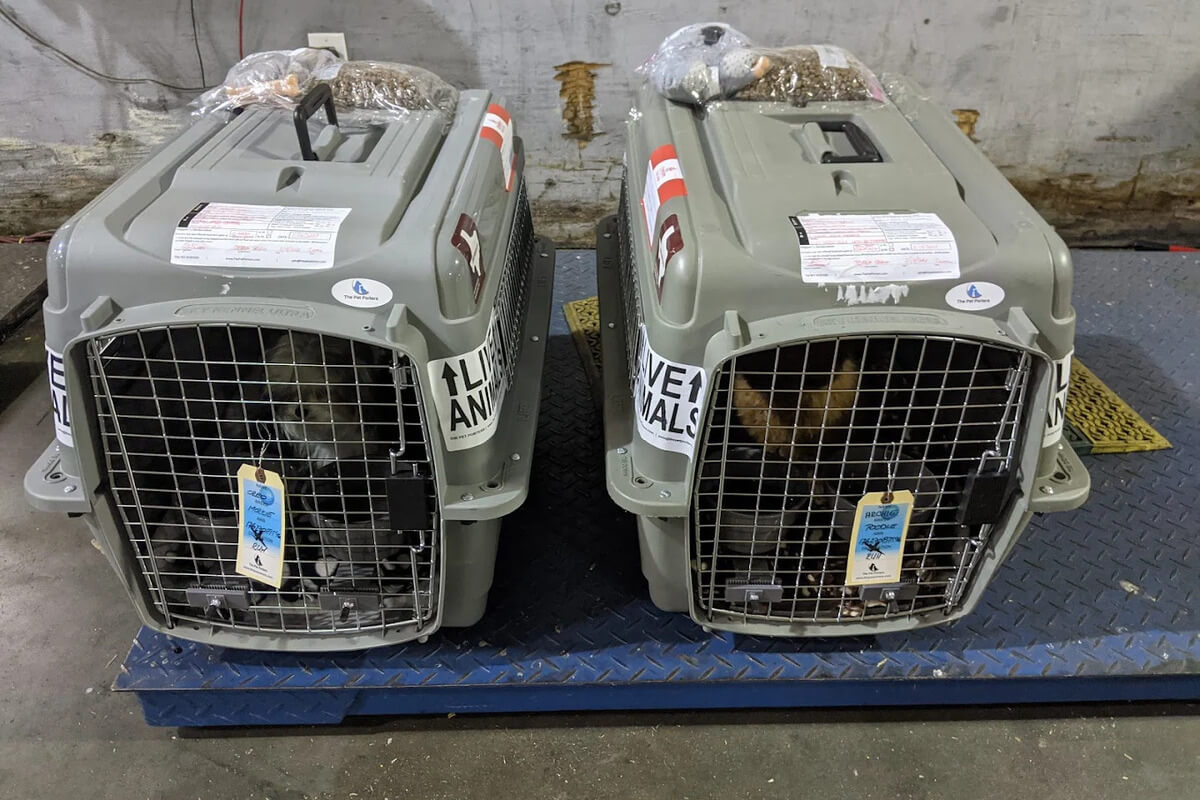
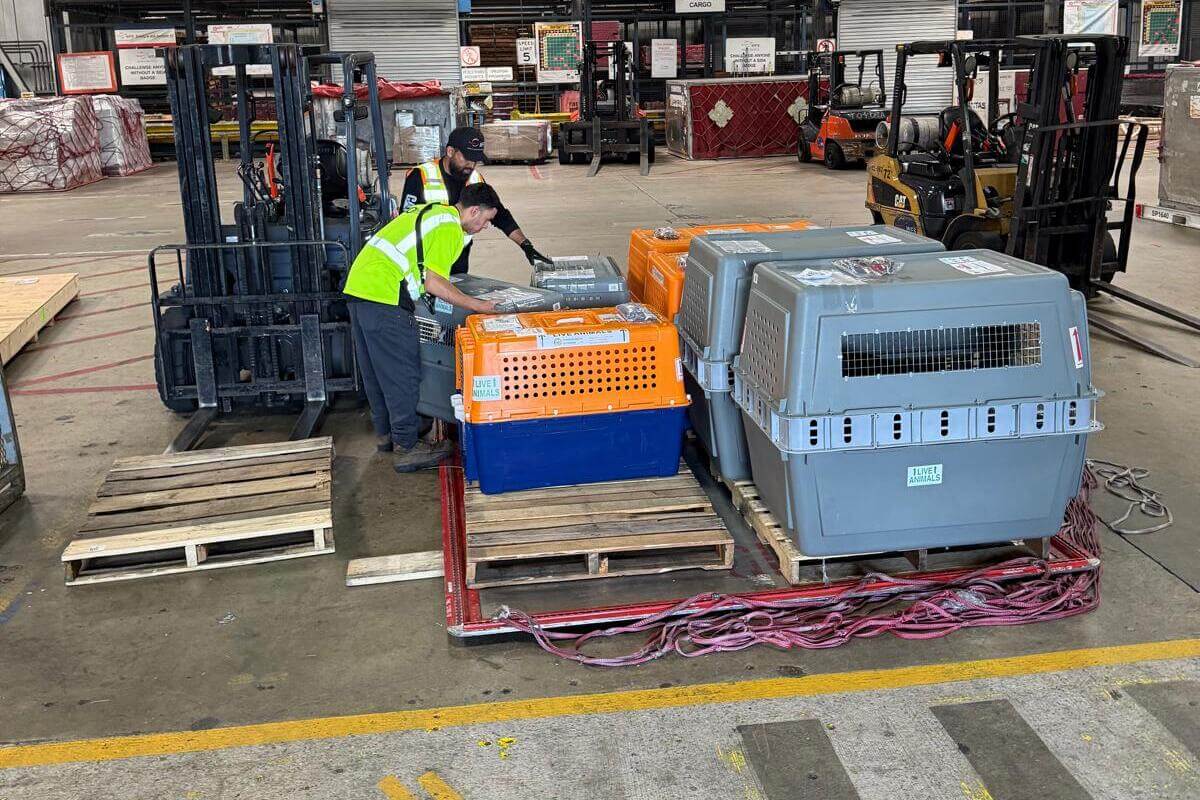
Every pet traveling by air cargo must be housed in an IATA-compliant travel kennel. These crates must meet specific size, ventilation, and structural requirements to be accepted by airlines for live animal transport.
The crate must be large enough for your pet to stand, sit, lie down, and turn around naturally. It must feature secure locking mechanisms, water dishes that can be accessed from outside without opening the kennel, and absorbent bedding material inside. For long international flights, crates should also include a small food pouch on the outside labeled with feeding instructions.
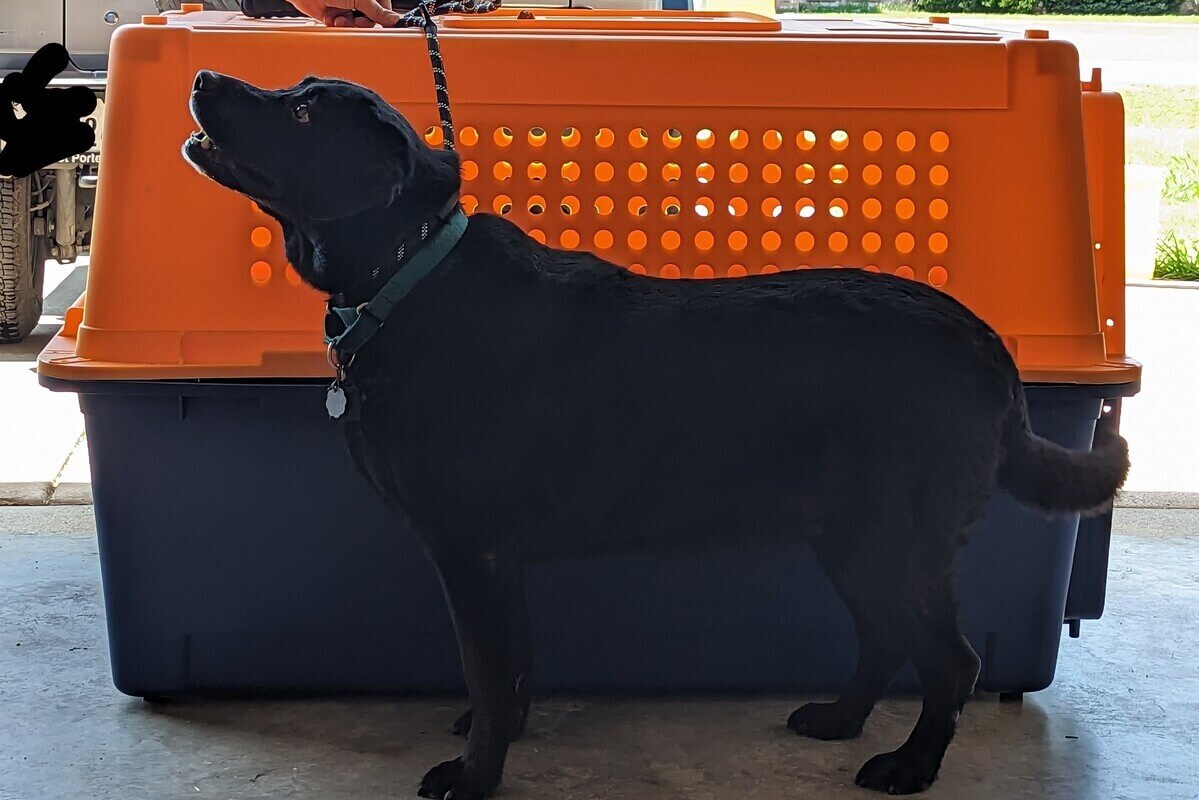
Crate training before a move is strongly encouraged. Pets that are familiar and comfortable with their travel crate experience significantly less stress during transport. Ideally, begin crate training at least four to six weeks before departure, using meals, toys, and rest periods inside the crate to create positive associations.
The Pet Porters offers professional pet crate fitting services to ensure your pet's kennel meets airline and IATA standards before travel day.
PCS Pet Move Timeline: When to Start Planning
Timing is everything in military pet relocation. Many families make the mistake of beginning pet travel planning too close to their reporting date — which can cause costly delays, missed flights, or in the worst case, pets being unable to travel at all.
Recommended Planning Timeline
Keeping Your Pet Comfortable During a Long-Distance Military Move
Long-distance PCS moves are stressful for everyone in the family — including your pets. Dogs and cats are highly sensitive to changes in routine, environment, and their owner's stress levels. Taking a few extra steps to keep your pet calm and comfortable can make a significant difference in how well they handle the transition.
In the days before travel, maintain your pet's regular feeding and exercise schedule as much as possible. Avoid introducing new foods or treats immediately before a long journey. Keep familiar bedding, toys, or clothing with your scent in the travel crate to provide comfort during transport.
Talk to your veterinarian about whether any calming supplements or anxiety medications are appropriate for your pet during travel. Sedatives are generally not recommended for air travel, as they can affect a pet's balance and respiratory function — but there are safe, vet-approved alternatives for anxious animals.
Upon arrival at your new installation, give your pet time to adjust gradually. Explore the new home together, maintain familiar routines, and provide plenty of positive reinforcement. Most pets adapt well within a few weeks once they realize their family is still together and their daily structure has returned.
PCS Orders Just Arrived? We're Ready to Help.
The Pet Porters specializes in military pet relocation — from stateside moves to complex OCONUS assignments. Our team handles documentation, airline coordination, and crate compliance so you can focus on your family.
Request a Quote Military Pet ShippingFrequently Asked Questions: Military Pet Relocation
Military pet relocation is one of the most logistically demanding types of pet transport — but with the right preparation and professional support, it's entirely manageable. The key is starting early, understanding your specific destination's requirements, and working with specialists who have experience navigating the unique challenges that military PCS moves present.
The Pet Porters has helped military families across all branches of the U.S. Armed Forces successfully relocate their dogs and cats during PCS moves to both stateside and overseas installations. Contact our team to learn how we can support your upcoming move.