Can Brachycephalic Dogs Fly? Airline Restrictions, Safe Alternatives & What Owners Need to Know
If you own a Bulldog, French Bulldog, Pug, Boston Terrier, or another flat-faced breed, you have probably already discovered the frustrating reality: most major airlines will not accept your dog as cargo. Here is what is actually happening -- and what your options are.
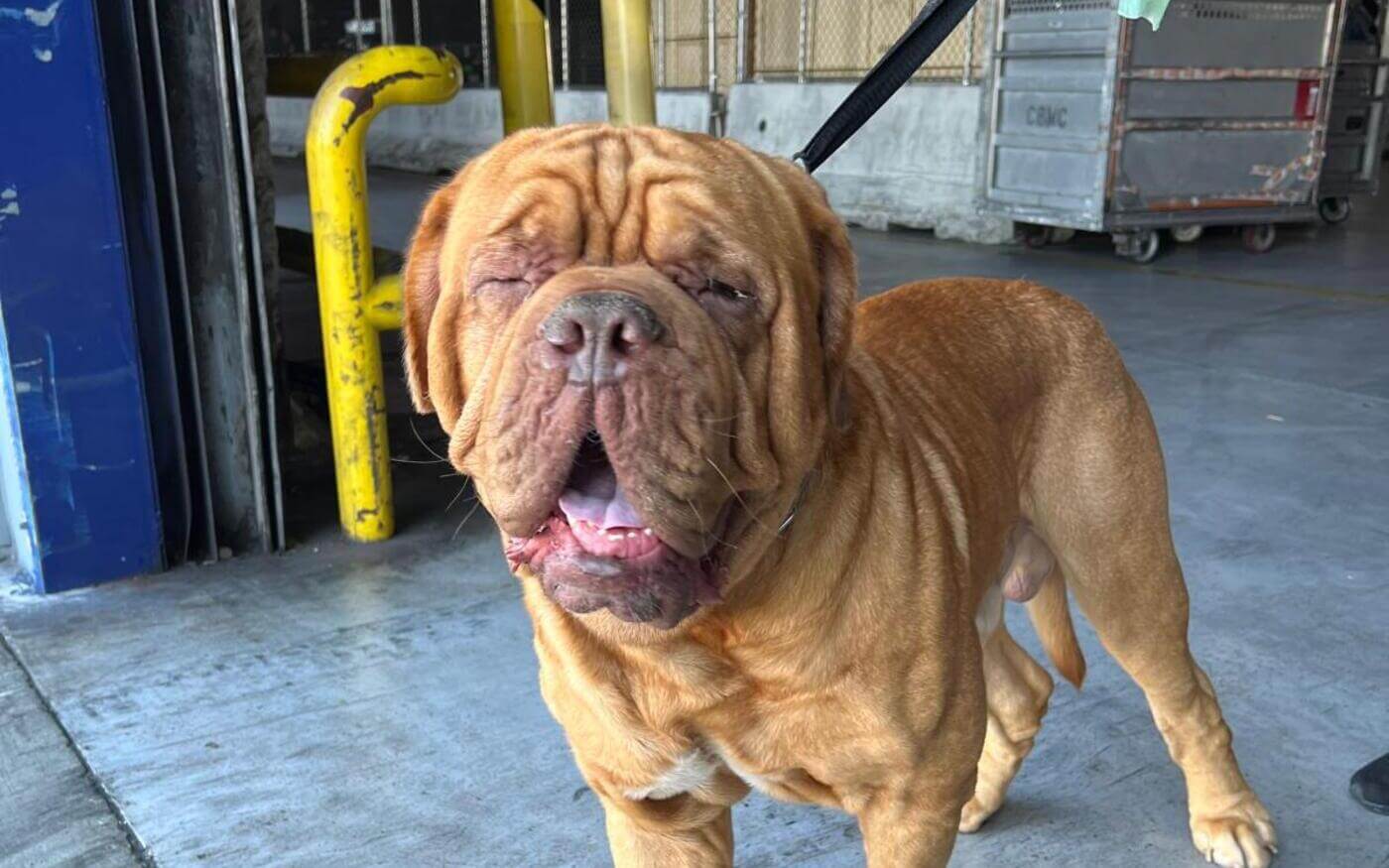
Brachycephalic dogs -- the umbrella term for breeds with shortened snouts, flattened faces, and compressed airways -- face some of the most restrictive air travel policies in the pet transport industry. The restrictions are not arbitrary. They exist because these breeds genuinely face elevated health risks during air travel that other dogs do not. Understanding why the bans exist, which airlines enforce them, and what alternatives are available is the first step to safely moving your flat-faced dog.
What Does Brachycephalic Mean -- and Why Does It Matter for Air Travel?
Brachycephalic comes from the Greek words for "short" and "head." It describes breeds that have been selectively developed to have compressed skull structures, resulting in shortened nasal passages, narrowed nostrils (stenotic nares), an elongated soft palate, and a narrowed trachea. These anatomical features combine to restrict airflow significantly compared to breeds with longer muzzles.
Under normal conditions, many brachycephalic dogs manage their breathing adequately. But under stress -- and air travel is inherently stressful for dogs -- their respiratory system is pushed to its limits. In the cargo hold of an aircraft, where temperatures, air pressure, and humidity differ from the cabin, and where the dog cannot be monitored by a human, the risk of respiratory distress increases substantially.
Why Brachycephalic Dogs Are Higher Risk in Cargo
- Restricted airways make panting -- the primary canine cooling mechanism -- less effective
- Higher susceptibility to heat stroke even at moderate temperatures
- Stress triggers heavier breathing, which can rapidly escalate to distress
- Cargo holds have different pressure and humidity profiles than the passenger cabin
- No human supervision means respiratory distress can go unnoticed
- Many incidents involving in-flight pet deaths have involved brachycephalic breeds
Which Breeds Are Considered Brachycephalic by Airlines?
The specific list varies by airline -- and this is where many owners get caught by surprise. A breed that is accepted by one carrier may be banned by another on the same route. Airlines maintain their own restricted breed lists, and the lists are not identical. Here are the breeds most commonly restricted:
Brachycephalic cat breeds face the same respiratory risks as dogs. These breeds are restricted from cargo by most airlines that ban flat-faced dogs:
Airline-by-Airline Brachycephalic Breed Policies
Breed restriction policies are not uniform across airlines. Some have total bans; others allow certain breeds under specific temperature conditions; a few have no breed ban at all but apply stricter temperature thresholds. Policies also change -- an airline that accepted your breed two years ago may not today. Always verify directly before booking.
| Airline | Brachycephalic Dogs Accepted in Cargo? | Notes |
|---|---|---|
| Alaska Airlines (Pet Connect) | Not Accepted | Maintains a published restricted breed list. Boston Terrier, Boxer, Bulldog, Chow Chow, Pug, Shih Tzu, and others banned from cargo. |
| American Airlines (PetEmbark) | Not Accepted | One of the longer restricted lists -- includes Affenpinscher, Bulldog, Chow Chow, Dogue de Bordeaux, Lhasa Apso, Presa Canario, Shar Pei, and others. |
| Lufthansa Cargo | No General Cargo Ban | No general brachycephalic cargo ban. However, applies stricter temperature thresholds for snub-nosed breeds. Route and season dependent. |
| KLM Cargo | Restricted | English Bulldog, French Bulldog, Boston Terrier, and Pug listed as restricted breeds for cargo transport. |
| British Airways (IAG Cargo) | Restricted | Bulldogs, Pugs, Boston Terriers, Boxers, and other snub-nose breeds not accepted. Stricter temperature embargo (75°F) applies even for non-restricted breeds. |
| Delta Cargo | Program Suspended | Delta has significantly suspended its live animal cargo program. Breed restrictions are largely moot -- most pets cannot ship on Delta regardless of breed. |
| United PetSafe | Significantly Reduced | United has reduced program availability. Verify current status before assuming availability on your route. |
Brachycephalic Breeds Face a Double Embargo Problem
Even on airlines that do accept brachycephalic breeds in cargo, these dogs face a more restrictive temperature embargo than other breeds. Standard airline cargo embargoes kick in when ground temperatures exceed approximately 85°F or drop below 20°F. For brachycephalic breeds, the heat embargo threshold is tighter -- British Airways, for example, applies a 75°F limit for snub-nosed breeds.
This creates a narrower seasonal travel window for these breeds. A standard dog might travel safely in May or September when temperatures are moderate. A brachycephalic dog on the same route might already be within embargo range at those temperatures. If you have a restricted breed and a strict move date, your options narrow significantly.
"For many brachycephalic breeds, the question is not just which airline accepts them -- it is also whether the season, route, and temperature forecast align with a safe travel window. That is why we plan brachycephalic moves months in advance."
Safe Alternatives for Moving a Brachycephalic Dog
Being turned away by airline cargo programs does not mean your Bulldog or Frenchie cannot be relocated safely. It means you need to think differently about how the move is structured. Here are the options available -- each with genuine trade-offs to consider.
Door-to-Door Ground Transportation
Best Option for Most Brachycephalic BreedsGround transport in a climate-controlled vehicle is the safest and most commonly recommended option for brachycephalic breeds. A professional handler accompanies your dog the entire journey -- there is no cargo hold, no unsupervised holding, and the temperature is actively managed throughout.
- No breed restrictions whatsoever
- Climate-controlled vehicle -- no embargo risk
- Continuous human supervision
- Rest stops every 4-6 hours
- Door-to-door delivery
- Not available for Hawaii, Alaska, or international moves
- Longer travel time for cross-country moves (4-6 days coast-to-coast)
In-Cabin Pet Nanny Service
For Small Brachycephalic Breeds Under Weight LimitSmall brachycephalic dogs that meet the airline's in-cabin weight limit (typically under 20 lbs combined with carrier) can travel in the aircraft cabin with a dedicated pet nanny. In-cabin travel bypasses the cargo breed ban entirely because the ban applies specifically to the cargo hold -- not the passenger cabin.
- In-cabin -- no cargo hold restrictions apply
- Direct supervision by professional nanny
- Cabin temperature controlled
- Works for domestic and some international routes
- Weight limit: typically under 20 lbs with carrier
- Not available for most transatlantic or transpacific flights
- Full-size Bulldogs and Boxers will not qualify
Owner Flies With Pet In-Cabin
Small Breeds OnlyIf your brachycephalic dog is small enough to qualify for in-cabin travel, flying with your dog yourself is another option. The same weight limits apply -- the pet and carrier combined must fit under the seat in front of you. French Bulldogs, Pugs, and Boston Terriers may qualify if they are on the smaller side.
- You are with your dog the entire flight
- No cargo breed ban applies in-cabin
- Lower cost than nanny or ground transport
- Requires you and pet on same flight
- Strict weight limit -- typically 20 lbs combined
- Not possible on most international long-haul routes
Airlines Without a Breed Ban -- With Caution
Verify Current Policy Before BookingLufthansa Cargo does not maintain a general brachycephalic breed ban for cargo. For international moves where ground transport is not an option and the pet is too large for in-cabin, finding an airline without a breed ban -- on a route with appropriate seasonal temperatures -- may be viable. This requires careful planning and monitoring.
- May be the only option for large brachycephalic breeds going international
- Frankfurt Animal Lounge provides supervised transit care
- Stricter temperature embargo than non-brachycephalic breeds
- Narrow seasonal travel window
- Higher veterinary pre-screening recommended
Before Any Travel: Veterinary Assessment for Brachycephalic Dogs
Regardless of which transport method you choose, we strongly recommend a thorough veterinary evaluation for brachycephalic dogs before any long-distance move. Your vet should assess the severity of your dog's brachycephalic anatomy -- some dogs in these breeds have significantly more compromised airways than others of the same breed.
Ask Your Vet Before Moving a Brachycephalic Dog
- Does my dog have stenotic nares (narrowed nostrils)?
- Has my dog been evaluated for elongated soft palate?
- Has surgery been recommended and if so, is travel safe before it?
- What is my dog's exercise and heat tolerance?
- Are there any medications that might help during transit stress?
- Is my dog's current weight appropriate for their airway anatomy?
- Are there any conditions that would make travel inadvisable entirely?
- What is my dog's fit-to-fly status?
It is also worth noting that brachycephalic obstructive airway syndrome (BOAS) surgery -- which widens the nostrils and shortens the soft palate -- can significantly improve a brachycephalic dog's airway function and may open up travel options that would otherwise be unavailable. If your dog has been recommended for this procedure, discuss travel timing with your veterinarian.
Frequently Asked Questions
The Bottom Line for Brachycephalic Breed Owners
Moving a flat-faced dog takes more planning, more flexibility, and more expert coordination than moving a standard breed. Airline cargo is genuinely not a safe or available option for most brachycephalic dogs on most routes. That is not a bureaucratic inconvenience -- it is a reflection of real respiratory risk that the industry has responded to with policy.
The good news is that safe alternatives exist. Ground transport is an excellent solution for domestic moves. In-cabin travel -- either personally or with a pet nanny -- works for smaller breeds on appropriate routes. And for international moves, the right specialist can identify airlines and seasonal windows that make the move viable even for restricted breeds.
The Pet Porters has moved brachycephalic dogs across the country and overseas. Every move is different, and we treat it that way. Contact us with your breed, your destination, and your timeline and we will tell you honestly what your options are.

Related Articles & Resources
Need to Move a Brachycephalic Dog?
Tell us your breed, size, destination, and timeline. We will identify the safest and most practical transport option -- whether that is ground transport, in-cabin nanny service, or an airline routing that works for your breed. No guessing, no surprises.